
 Asheville’s Beginnings
The land in and surrounding Asheville was part of the ancestral land of the Cherokee Nation. For thousands of years, the Cherokee thrived in Asheville (or Togiyasdi which translates to “Where They Race”), and today the Eastern Band of Cherokee Indians (EBCI) remains a cornerstone of Western North Carolina that continues to shape the culture of Southern Appalachia. If you’re interested in learning more, visit the Museum of the Cherokee Indian, located in Cherokee, approximately 60 miles west of Asheville.
It was after European settlers and the American Revolution in 1785 that Colonel Samuel Davidson received a land grant from the state to settle in the Swannanoa Valley with his family. The Davidsons lived on Christian Creek in the Swannanoa Valley area known as "Eden Land." This was the first of many homesteads that led to a legislative act initiated by Colonel David Vance and William Davidson, who petitioned the NC House of Commons to establish what would become known as Buncombe County in December of 1791.
A year later, in 1792, Buncombe County was officially established, and the city of "Morristown" was designated as its county seat. In 1797, the city was renamed “Asheville” in honor of North Carolina Governor Samuel Ashe. In that same year, Asheville became an outpost–surrounded by mountains and rivers on all sides–that well-known frontiersmen Daniel Boone and Davy Crockett traveled through.
Asheville got its first boost in tourism when the Buncombe Turnpike, a 75-mile route through North Carolina from the South Carolina border to the Tennessee border, was completed in 1828 and opened the westernmost part of the state to settlement and trade. Although the Civil War of the 1860s hurt the region’s economy, it was revitalized on October 3, 1880, with the arrival of the railroad. This addition ushered in a new era of economic prosperity and growth that had yet to be experienced.
Great Sanitorium of Our Eastern Country
Not only did the arrival of the railroad fortify Asheville’s economy, it transformed the area into a resort and rehabilitation center. Doctors studying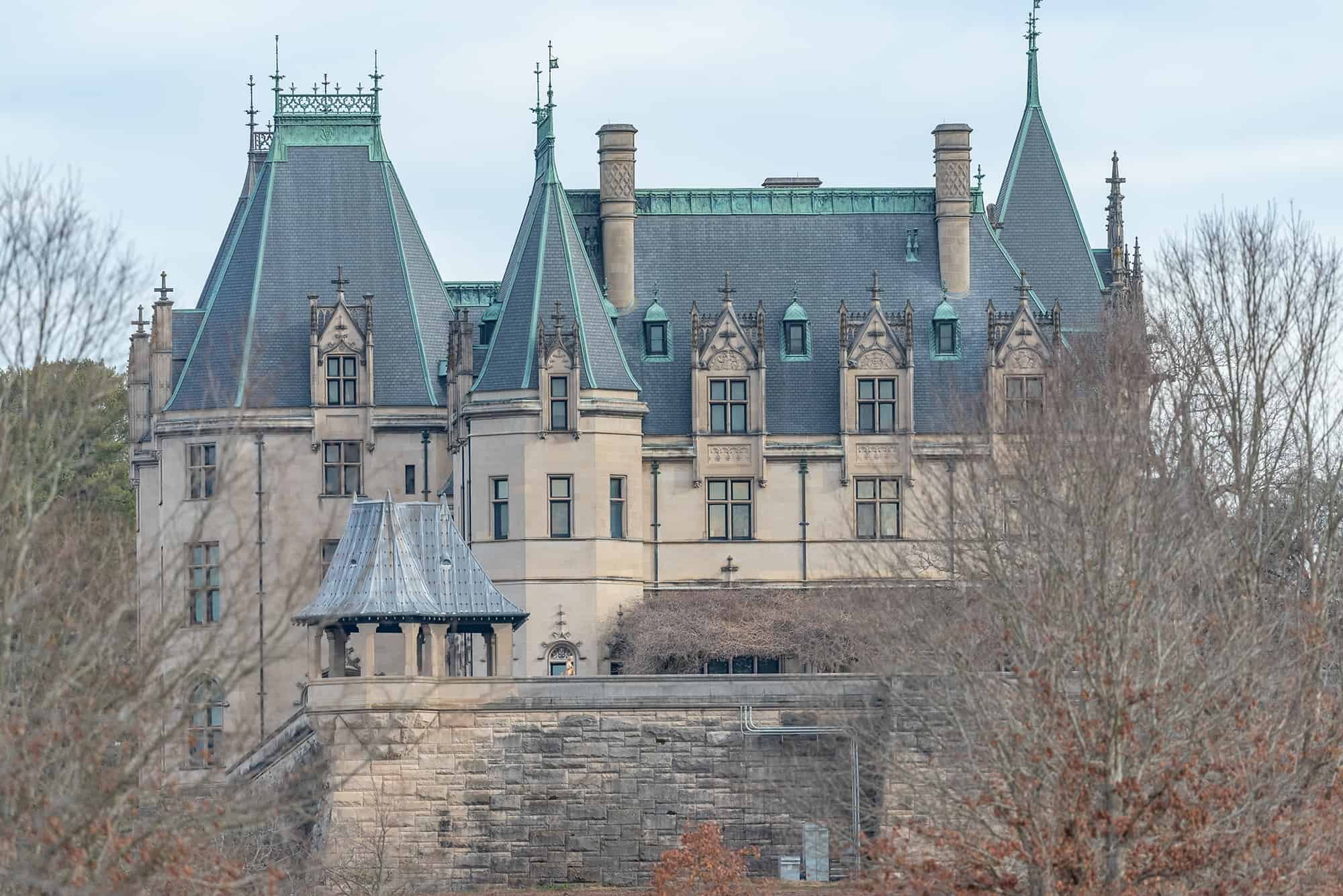 climate theory in the late 19th and early 20th centuries purported that Asheville’s cool mountain air, gentle breezes, and dense forests made it the “great sanitorium of our eastern country.”
Asheville’s atmosphere was equated with having “dry, tonic, invigorating, bracing qualities,” and lung diseases like Tuberculosis (a leading cause of death during this time) responded well to fresh-air treatments. As a result, Asheville became a hub for visitors searching for a mountain escape, and its population climbed to 10,000 permanent residents in 1890.
Some of Asheville’s most prominent names came to the city for health-related reasons– Edwin Wiley Grove (aka E.W. Grove) with his “tasteless chill tonic” empire, George Willis Pack with his public philanthropy (including funds to aid hospitals, the YMCA, and veterans' organizations), and George Vanderbilt with his iconic Biltmore Estate was an idea brought about after a health visit to the area with his mother. These residents played a crucial role in perpetuating Asheville’s reputation as a wellness destination.
The Grove Park Inn, which was completed in 1913, joined the ranks of other hotels (Kenilworth and Langren) seeking to further expand the luxury resort industry in Asheville. E.W. Grove envisioned a grand lodge that would accentuate the majestic mountain setting. Unable to find the right architect to bring these dreams to life, Grove turned to his son-in-law and Atlanta journalist, Fred Seely, a young man with no architectural experience.
Seely presented a sketch of the proposed hotel to Grove who not only accepted the plan but entrusted Seely with the enormous task of building the extravagant Arts and Crafts-style hotel. Radiating elegance, the Grove Park Inn endures today as a historical site in Asheville. Famous historic guests include Harry Houdini, Henry Ford, Albert Einstein, Helen Keller, Eleanor Roosevelt, and many more. If visiting during late November or December, check out the magical National Gingerbread House Competition display.
Holistic health and wellness have become staples of Western North Carolina, especially within the Asheville community. The crisp mountain air, refreshing creeks, lush flora, and natural hot springs make this area one that is well-known for rehabilitation, relaxation, and retreat. Home to the oldest herbalism school in the southeast (Appalachia School of Holistic Herbalism), salt caves, massaging waterfalls, and spas with mountain views, it’s no wonder Asheville is a draw for anyone prioritizing self-care and seeking wellness inspiration.
Land of Sky, Dreamers, and Artists
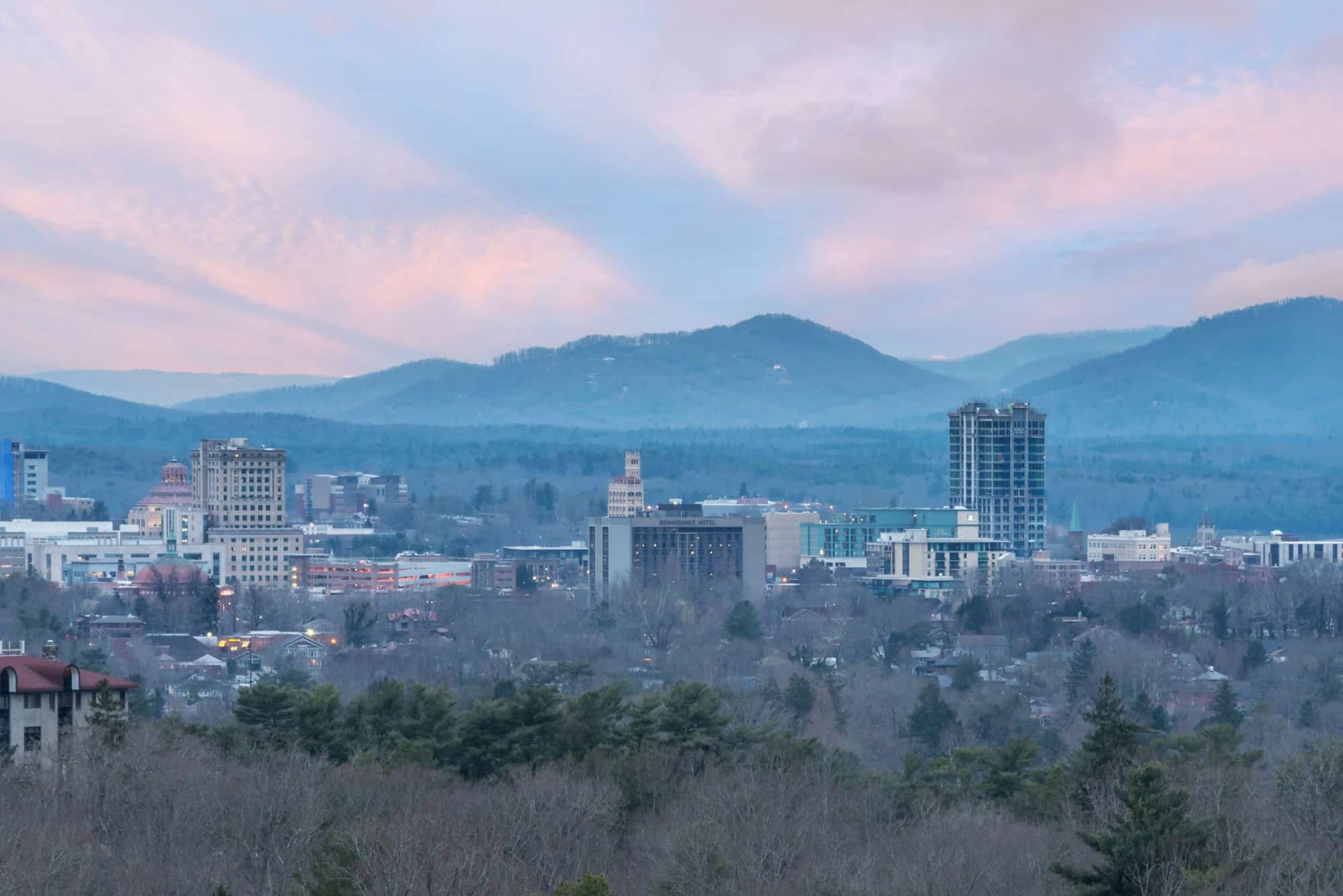 While Asheville has several monikers including “Paris of the South” and the “San Francisco of the East,” its most well-known and widely-accepted nickname is “The Land of Sky.” This name was coined by a Salisbury, North Carolina-born writer, Frances Fisher Tiernan, who wrote under the pseudonym Christian Reid. Among the 50 novels she penned, one published in 1875 was set in WNC: The Land of the Sky; Or, Adventures in Mountain By-Ways. This brilliant appellation stuck and is still used in tourism advertisements today, just as it was in the late 19th century.
When a young and affluent aristocrat from New York named George W. Vanderbilt visited Asheville in the 1880s with his ailing mother to convalesce in the clean mountain air, Asheville’s cultural and geographical landscape was forever changed. Described later by Vanderbilt as the “most beautiful place in the world,” he purchased 125,000 acres in Asheville and eventually constructed America's largest private residence—the Biltmore Estate.
For five years (1890-1895), hundreds of workers labored to complete the epic 255-room, French Renaissance château and its expansive grounds. Vanderbilt commissioned renowned landscape artist Frederick Law Olmsted to design the grounds and gardens and architect Richard Morris Hunt to help him plan the house.
Dreamers, visionaries, artists, and explorers flocked to Asheville as it rose to prominence in the 1880s and 1890s which is a trend that is very much alive and well today. Aside from E.W. Grove and Vanderbilt, among its most notable residents is author Thomas Wolfe. Born in Asheville in 1900, Wolfe grew up in his mother's boardinghouse, Old Kentucky Home (also known as "Dixieland" in his famed autobiographical work Look Homeward, Angel). Today, the home is a historic site that pays homage to the giant of 20th-century American literature and allows visitors to explore the house with an expert tour guide.
Some other notable residents include songstress Roberta Flack (born in Black Mountain and memorialized with a larger-than-life mural on Black Mountain Brewing downtown), Zelda Fitzgerald (wife of F. Scott Fitzgerald who spent portions of nine years as a patient at Highland Hospital before perishing in a fire there), Charles Frazier (author of Cold Mountain, not to be confused with the beloved Highland Brewing beer of the same name), Robert Moog (engineer and founder of the synthesizer manufacturer Moog Music), and many more.
The mountains of Western North Carolina have long been a hub for craftspeople—from the John C. Campbell Folk School founded in 1925 to the Southern Highland Craft Guild founded in 1928 to the Penland School of Craft founded in 1929 to the Black Mountain College founded in 1933 to the native makers who lived in the region for centuries before. Perhaps it’s the mountainous beauty that makes the perfect muse, or maybe it’s a reverence for tradition or resourcefulness of Appalachian residents, but handicraft tradition and experimental art are vital parts of what makes Asheville the innovative, vibrant, and “weird” city that it is today.
The Great Depression + Architectural Preservation
At the height of the roaring 1920s, much of the stunning downtown architecture was erected (Jackson Building in 1924, Westall Building in 1925, First Baptist Church and Flatiron Building in 1927, City Hall and S&W Cafeteria in 1928, Public Service Building and Grove Arcade in 1929). However, when the stock market crashed in 1929 and ushered in the Great Depression of the early 1930s, it brought financial devastation to Asheville and set it on a downward spiral economically which was a harsh contrast to the flourishing bohemian renaissance that characterized the city in the early 1900s.
The architects of the iconic Art Deco structures include Richard Sharpe Smith, Douglas Ellington, Beacham & LeGrand, and Ronald Greene. After the crash of 1929, many cities chose to default on Depression-era bonds and liabilities. However, Asheville decided to pay back every single dime of the city's debts. Many generations paid the price for this decision until the slate was wiped completely clean in 1977.
Until that year, Asheville had no money to invest in the "urban renewal" that was popular during the 1950s and 1960s in other cities. The fateful commitment to debt repayment saved the dozens of Art Deco buildings erected during the city's boom decades earlier. Today, these structures provide downtown Asheville with an Art Deco collection that is second only to Miami Beach’s Art Deco District that stretches from 5th to 23rd streets.
The (Blue Ridge) Mountains are Calling
Today, an estimated 11 million visitors come annually to Asheville (4 million of which are overnight guests) for many of the same reasons people did a century ago. In the mid-1930s as a response to The Great Depression, two projects went underway that would add to Asheville's acclaim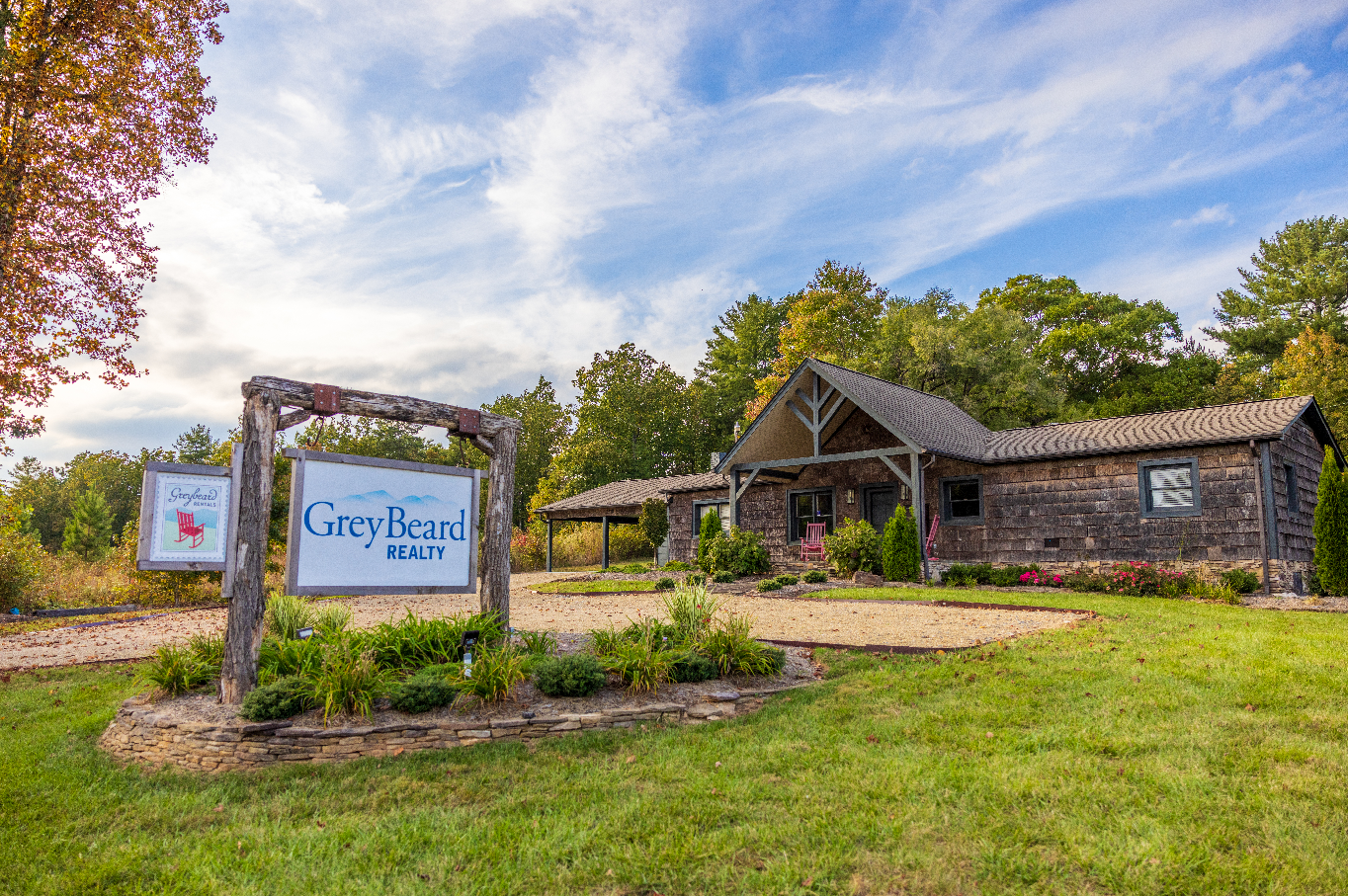 as a global tourist destination. Under Franklin D. Roosevelt’s administration, the construction of the Great Smoky Mountains National Park and Blue Ridge Parkway (known then as the Appalachian Scenic Highway) not only gave much-needed employment to members of the Civilian Conservation Corps (CCC), they cemented Asheville’s reputation as a scenic destination worth visiting. The Blue Ridge Parkway spans 469 miles and has been the top most visited unit of the US National Park system for 70+ years.
Teeming with culture, art, and breathtaking mountain scenery, Asheville has been named a top place for foodies and travelers, but it’s also been ranked in Livability’s “Top 100 Best Places to Live” in 2022 and in Travel + Leisure Readers’ Top 15 Favorite Cities in the U.S. in 2023. If you’re looking for your own home or land to build in the mountains, GreyBeard Realty has several homes and lots available to make your dream of living in Asheville a reality. Stop by one of our four office locations, or contact a GreyBeard Realty agent today to become a part of Asheville’s rich and treasured history!