
Guide to Buying Real Estate in Buncombe County NC
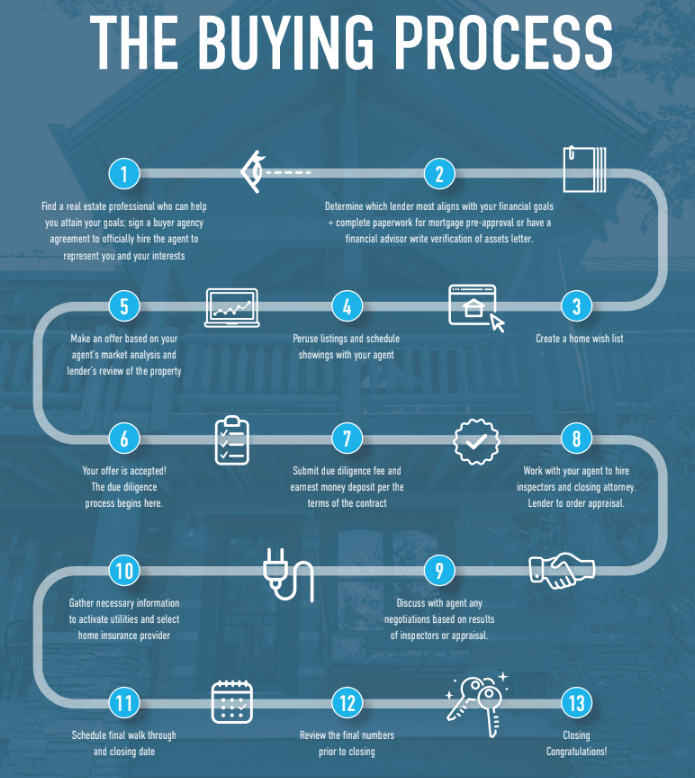 What are the typical steps of the home-buying process in Asheville?
- Mortgage pre-approval (or pre-qualification if you are paying with cash)
- Shopping for homes
- Offer and negotiation
- Due diligence period, which includes times for inspections and mortgage appraisal, if applicable
- Pre-Closing and Title Search
- Closing
Is Buncombe County a buyer’s or seller’s market?
For years, Buncombe County has been a tight seller’s market, due largely to the low inventory of homes available at any given time. The low supply outpaced demand for homes and caused prices to rise for years. This also often translated to very short lead times and days on market. Over 2024 and 2025, the Buncombe County market began to soften and has shifted to a mild buyer’s market.
What are the current market trends in Buncombe County?For years, Buncombe County has been a tight seller’s market, due largely to the low inventory of homes available at any given time. The low supply outpaced demand for homes and caused prices to rise for years. This also often translated to very short lead times and days on market. Over 2024 and 2025, the Buncombe County market began to soften and has shifted to a mild buyer’s market.
By mid-year 2025, the median sales price was at $491,000 with over 1,700 properties on the market. Updated market trends can be found here.
What is the cost of living Asheville and Buncombe County?The annual average for our region tends to hover over the national average and has ranged from 95.6 to 106.2 since the 1990s. Overall cost of living for all items averages at 102.7 over 100 for Asheville. As a comparison, Asheville cost of living sits between Chapel Hill, NC, and Charleston, SC. Housing tends to be the largest driver of cost of living expenses at 106.1 over 100.
 The median household income in Buncombe County is a little over $70,000 as of 2023.
What is the total number of housing units in Buncombe County? There are a total of 137,126 housing units in Buncombe County.
What is the total population of Buncombe County?
The total population of Buncombe County is 275,901.
What factors are unique to mountain settings that I should consider when buying a home in Asheville and the surrounding region?
It’s important to verify utilities at the home. Mountain homes can include city water and sewer, but it is also not uncommon for homes to be on well water and septic tanks, especially in more rural areas or in secluded settings.
Internet and cell services can also be limited at particular properties.
Consider the home or property terrain and slope. For buyers of raw land, it will be important to identify buildable areas.
Easements for utilities can impact your use of the property
It’s not uncommon for mountain homes to have private roads that aren’t maintained year-round, and some roads may require 4-wheel or all-wheel drive vehicles for access
Other considerations can range from natural hazards, such as floodplains, to local building regulations
While the list of considerations for purchasing a mountain home can feel daunting, GreyBeard Realtors have decades of experience in our mountain region and can guide you through the entire process to ensure a smooth homebuying process.
What lifestyle differences can I expect when moving from a large city to Asheville and the surrounding mountain region?
In addition to a slower pace, commutes from location to location in the Western North Carolina mountains can include drive time on private roads, unpaved roads, high elevation roads, and dirt roads. After heavy rains or snow accumulation, the road can become more challenging to drive on.
While connectivity is always improving, some locations around Buncombe County have more limited cell service or internet connections.
The average elevation in Buncombe County is over 3,700 feet above sea level. Even downtown Asheville sits at over 2,200 feet in elevation. The difference in elevation can cause notable changes in temperature. Mt Mitchell, the tallest mountain east of the Mississippi River, can have temperatures that are an average of 15-20 degrees cooler than downtown Asheville